Choosing the Right Brake Caliper Colour: Coordinate Your Wheels and Bodywork
Choose your body colour first, your wheel finish second and your caliper colour last. For a restrained result, start with black or charcoal. For a visible accent, compare red, yellow or a colour related to the bodywork. The right choice is the one that gives the whole car the balance you want.
A brake caliper presses the pads against the brake disc. Its visible outer body also gives you a small area of colour inside the wheel. Treat that area as an accent within a larger design, and check the proposed finish with the caliper manufacturer before any work begins.
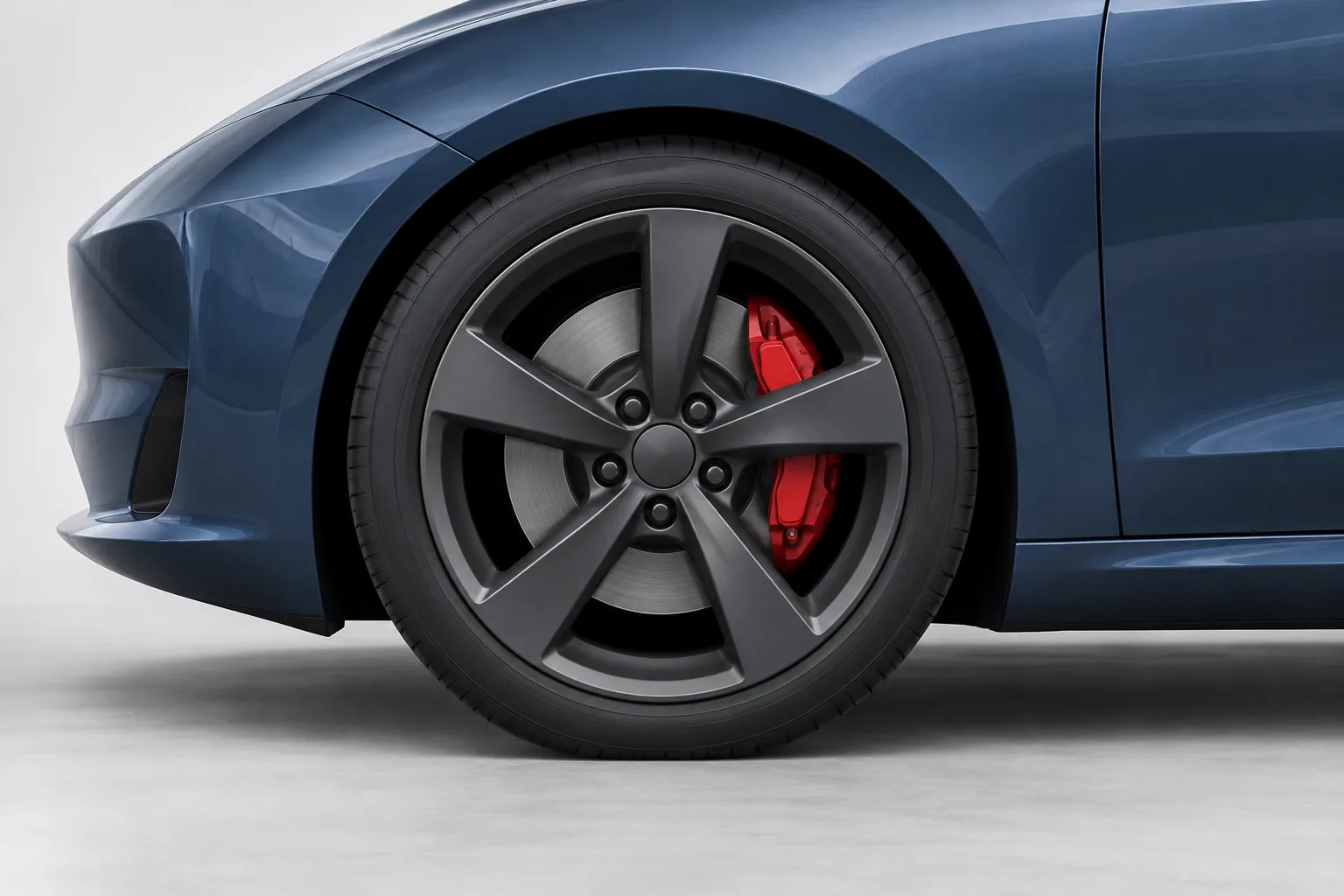 The blue bodywork and dark wheel establish the main palette; the red caliper supplies a small, warmer accent. Original AI-generated illustration created for this article.
Decide how much attention the calipers should receive
Begin with a simple question: when you look at the parked car, where should your eye go first? If you want to admire the body shape and wheel design, choose a caliper colour that stays quiet. If you want a more expressive wheel area, give the caliper enough contrast to be noticed through the spokes.
A useful shortlist has three options:
- Quiet: black or charcoal alongside a dark wheel, or a muted grey alongside silver.
- Coordinated: a caliper that repeats the body colour or one existing accent.
- Contrasting: a deliberately different colour, such as orange beside blue bodywork, supported by otherwise restrained wheels and trim.
These are design suggestions rather than rules about what a car should look like. Compare them on your own combination before choosing. A loud caliper can be exactly right for a simple body and wheel palette, while a quiet one may give an elaborate wheel the space it needs.
Keep the distinction between appearance and hardware clear. In Porsche's 2021 911 GT3 press kit, the standard cast-iron brake system has red calipers with black available, while the optional ceramic system is described with yellow unless otherwise requested. That is a manufacturer-specific example, not a universal colour code.
The practical conclusion is to identify a brake system from its specification and records. A painted colour alone cannot establish the installed equipment. Choose the colour for the visual effect you want, and ask a brake specialist to confirm any proposed hardware change separately.
Start with the wheel colour and spoke design
The wheel sits immediately in front of the caliper, so use it as your first colour reference. Assess the actual finish, including the centre and rim, rather than choosing from a photograph of a different wheel.
With silver wheels, try charcoal for a quiet detail and red or deep blue for a clearer accent. If you prefer silver calipers too, compare the two silvers together: decide whether you want a close match or an obviously different grey. Avoid approving an almost-match from separate screen images.
With black wheels, compare black calipers against red, yellow and a restrained metallic tone. Choose black if you want the wheel area to read as one dark composition. Choose a visible accent if the brake detail is part of the look you want. Check that accent from a whole-car view as well as close up.
With graphite or gunmetal wheels, charcoal makes a useful starting point. Burgundy, muted gold or a body-related colour are alternatives to test. With bronze or gold wheels, begin with black or charcoal, then try a muted warm caliper only if you want that relationship repeated. The wheel already provides a distinctive colour.
For a two-tone wheel, assess both the bright face and the darker recesses. A quiet caliper can let the spoke pattern take priority. If the wheel itself is painted a strong colour, try neutral calipers before introducing another strong accent.
Spoke design matters too. Brembo links more open alloy wheels with greater visibility of the braking components. Examine the gaps in your wheel and the caliper behind them. Do not assume a colour will be prominent simply because it looks bright on a sample.
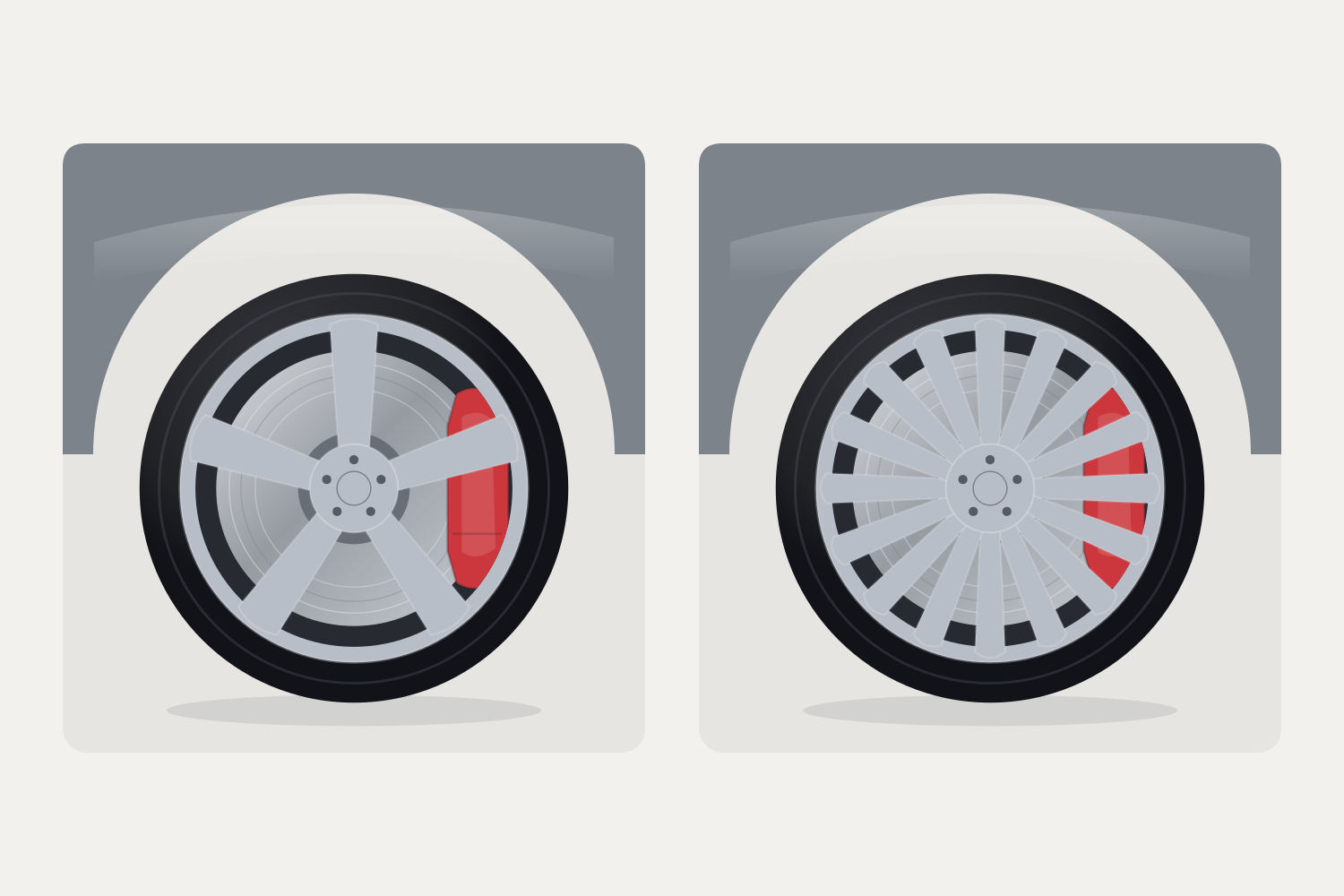 Left: an open five-spoke wheel. Right: a denser spoke pattern. Both contain the same schematic red caliper; the spokes change how much is visible. Original hand-authored illustration.
Use the body colour to narrow the shortlist
Once the wheel finish is settled, compare the caliper against the largest coloured surface: the bodywork. Include any planned wrap in this decision. If the body colour will soon change, assess the calipers with the future palette before paying for a finish you chose around the current paint.
For white, black, silver or grey bodywork, begin with a neutral caliper and one stronger alternative. Red, yellow and blue are useful candidates to compare. Choose the candidate that supports your wheel and trim rather than assuming neutral bodywork requires a bright accent.
For blue bodywork, compare charcoal, a related blue and a warmer orange or muted gold. For green bodywork, try charcoal with bronze wheels, or a restrained gold with silver wheels. Red is another option if you deliberately want a stronger colour contrast.
For red or orange bodywork, start with black or charcoal to give the body colour priority. A body-coloured caliper is worth testing if you want repetition. For purple bodywork, compare charcoal against muted gold or yellow, then decide whether you prefer the wheel area quiet or expressive.
The table gives starting points for a shortlist. These are aesthetic suggestions, not manufacturer colour specifications or promises of an exact match.
| Bodywork | Wheel finish | Quiet caliper to compare | Accent caliper to compare |
|---|---|---|---|
| White or silver | Silver or graphite | Charcoal | Red or deep blue |
| Black or grey | Black | Black or charcoal | Red or yellow |
| Blue | Silver | Charcoal | Orange or muted gold |
| Green | Bronze | Black or charcoal | Muted gold |
| Red or orange | Black or graphite | Charcoal | A related body-colour shade |
| Purple | Graphite | Charcoal | Muted gold or yellow |
Keep the options few. Choose a quiet baseline and one or two accents, then compare them beside the actual wheel finish. That makes the decision easier than judging a long list of colours in isolation.
Choose between matching, neighbouring and contrasting colours
You can organise a shortlist around three relationships. Matching repeats a colour, neighbouring colours stay close on a colour wheel, and contrasting colours create a more obvious difference.
A matching approach might pair blue bodywork with blue calipers. Decide how close the match needs to be. If you want an exact match, ask the refinisher whether the chosen coating system can achieve it and request a finished sample. A colour name shared by two products is not sufficient evidence of a match.
A neighbouring approach might pair blue bodywork with a blue-green caliper. This is called an analogous palette: the colours sit next to one another on a colour wheel. It gives you another candidate between repeating the body colour and choosing a much stronger contrast.
A contrasting approach could use orange calipers with blue bodywork. Adobe's guide to complementary colours explains opposite and neighbouring relationships on a colour wheel, including the blue-and-orange pairing. Use that as a way to generate options, then decide whether the actual shades work on the car.
Black, white and grey are also useful comparison colours. You do not need a complementary pairing to create a successful design. A charcoal caliper may give you the balance you prefer, even after you have tested a more colourful alternative.
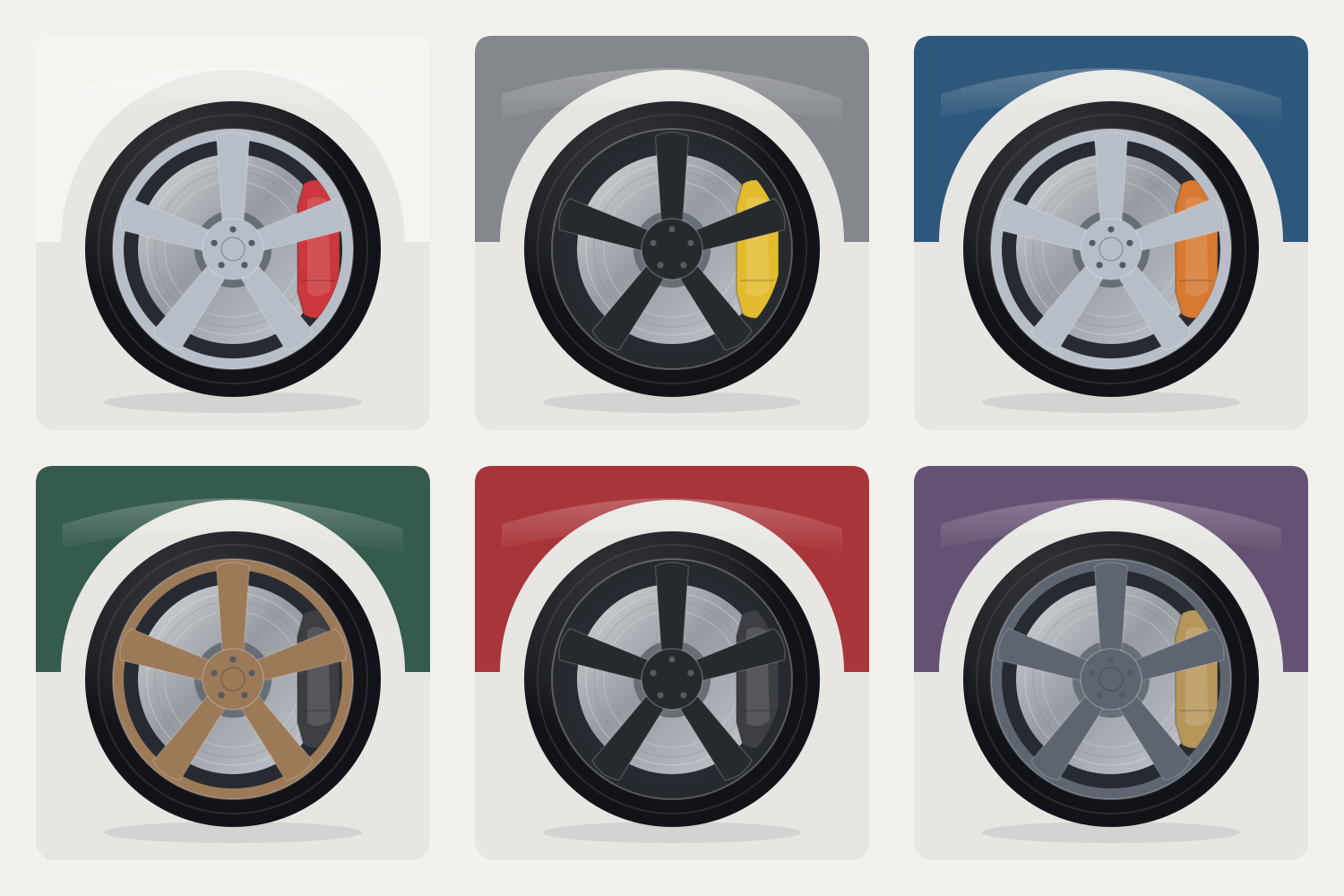 Top row, from left: white body, silver wheel and red caliper; grey body, black wheel and yellow caliper; blue body, silver wheel and orange caliper. Bottom row: green body, bronze wheel and charcoal caliper; red body, black wheel and charcoal caliper; purple body, graphite wheel and muted gold caliper. Original hand-authored illustration; colours are schematic.
Judge the coloured area at its intended size. In the comparison, the caliper is a small part of each wheel detail. A large paint sample is useful for checking the shade, but also test how that shade reads as a small accent behind the spokes.
Check the whole car, including trim and both axles
A caliper does not need to match everything. Give it one clear relationship to the rest of the car: repeat the body colour, echo an existing accent or supply a deliberate contrast. Then check whether the remaining details support that choice.
For a car with chrome window surrounds and silver wheels, try a quiet grey caliper before adding a new accent. For black trim and dark wheels, compare a dark caliper with a brighter one. If the wheels already have a coloured rim edge, test that colour on the calipers alongside a neutral alternative.
Avoid trying to repeat every detail at once. A coloured wheel, mirror cap, stripe and caliper can be a deliberate theme, but you should assess them together. Start by removing one proposed accent from the comparison and see whether you prefer the result. This is a useful design exercise before any work is booked.
Inspect the actual front and rear wheel areas as well. Look at the shape, visible area and position of each brake assembly. Check what is present behind the rear wheels before specifying the finish, especially if you are unsure whether the car has rear calipers or drums.
If you want consistency, give the specialist the same agreed colour and finish for all intended calipers. If the visible assemblies differ, compare the complete side of the car rather than enlarging each wheel detail to the same apparent size in a mock-up.
For a restrained result, keep the rear detail quiet if that is what the actual arrangement requires. There is no obligation to make every corner equally prominent. The aim is a coherent side view, with each coloured detail serving the overall design you chose.
Compare the finish and a real colour sample
Specify the finish as well as the shade. Gloss, satin and matt describe different levels of sheen, or surface shine, in coating terminology. Ask the supplier which finishes are available within the coating system approved for the proposed work, then compare finished samples with your wheel and bodywork.
Try a gloss caliper beside satin wheels if you want the two finishes visibly distinct. Try a lower-sheen caliper if you want a more restrained relationship. These are options to inspect, rather than a requirement to match the body, wheel and caliper sheen exactly.
For metallic colours, request a sample of the actual coating rather than a flat printed patch. Compare it beside the real wheel finish, including any bronze or gold tone you want it to coordinate with. Decide whether a difference is intentional before accepting it.
A screen can help organise ideas, but it cannot confirm the delivered colour. FOLIATEC's product information warns that photographic lighting and screen settings can prevent authentic colour reproduction. Use the final physical sample for approval.
View that sample beside clean bodywork and wheels in daylight, shade and the artificial light you commonly see the car under. Keep the sample position and viewing distance similar when comparing candidates. Place it visually close to the wheel opening without attaching anything to brake components.
Also compare a whole-car view at a few metres away. Ask whether you still notice the body and wheels in the order you wanted. If one sample dominates every view, test the quiet baseline again before accepting the stronger accent.
Record the supplier, product reference, agreed colour and finish. If a workshop mixes a custom shade, ask it to retain the formula and identify the approved sample. That gives both of you a specific reference for the job, rather than a description such as “sporty red”.
Treat refinishing as brake work
Choose the visual direction first, then ask the caliper or vehicle manufacturer whether refinishing is permitted for your particular assembly. Tell the brake specialist exactly which components you have and which coating you propose. If the manufacturer prohibits the work, keep the approved finish or investigate approved alternatives.
Manufacturers do not give identical advice. Brembo discourages repainting its calipers, citing risks from incorrect preparation, hydraulic work and heat that can damage seals. A specialist's involvement does not automatically override those restrictions.
Where refinishing is permitted, ask the specialist to confirm the compatible coating system, preparation method and protected areas. A general claim of heat resistance is not a vehicle-specific approval. Describe any intended track use too, so the supplier can confirm the product's scope.
FOLIATEC's application instructions, for example, prohibit paint on discs, pads and shoes, and identify sliding contact areas, dust covers, rubber brake lines and bleed screw threads for protection. They also restrict forced drying. These details explain why the job needs more than a colour choice; they are not a complete procedure for your car.
Before booking, obtain the current instructions for the exact product and agree the preparation, drying and full-curing schedule with the supplier. Plan the time when the car must remain unused around those instructions. Do not borrow a timetable from a different paint system or assume a dry-looking surface is ready.
Ask the workshop to assess the condition of the brakes before cosmetic work and to complete the required checks afterwards. Confirm applicable warranty terms with the relevant manufacturer, and ask your insurer whether the proposed work must be declared. If local inspection requirements apply, ask the inspection authority what it needs. Colour coordination does not answer those questions.
Make the final choice with a repeatable comparison
A consistent comparison is more useful than another collection of attractive wheel close-ups. Bring the decision back to the body colour, wheel finish and level of attention you wanted at the start.
- Fix the main palette. Confirm the current or planned body colour, wheel finish and major trim details.
- Choose a quiet baseline. Use black, charcoal or a restrained grey as one candidate.
- Add a coordinated candidate. Test a body-related colour or an existing accent you want to repeat.
- Add a contrast only if you want it. Compare a brighter alternative while keeping the other details the same.
- Inspect the actual wheel openings. Assess visibility at both axles and from the whole-car side view.
- Approve a physical sample and the proposed work. Confirm the shade, sheen, product instructions and manufacturer restrictions before booking.
For a planned wrap or wheel change, ImagineMyRide lets you specify your car from its vehicle catalogue and compare catalogue-based wrap and wheel ideas. Use those previews to establish the larger parts of the palette, then assess physical caliper samples with the specialist who will confirm the proposed work.
If you are still undecided, return to the quiet baseline. Keep it on the shortlist until a different sample clearly gives you the result you prefer. The most convincing choice is one you can explain simply: it repeats a colour you already have, creates an accent you deliberately want, or leaves the body and wheels to take the lead.