How to Match Your Wheels, Paint, and Trim
A set of wheels can look brilliant in a product photograph and strangely out of place on your car. The colour might work with the paint, but fight the window surrounds. The finish might echo the grille, yet make the spokes disappear. Sometimes every part looks good individually, while the complete car feels unfinished.
The answer is to choose the combination as a whole. Start with the paint, decide which existing trim details should guide the wheels, and give each element a clear role. A successful match can be subtle, sporty, classic, or deliberately bold; it does not require every surface to be the same colour.
This guide walks through that process, with practical palettes you can adapt to your own car. The styling suggestions are starting points rather than fixed rules. Your car's shape, the exact shade of each finish, and your personal taste should decide the final choice.
Start with the character you want
Before comparing silver, black, or bronze wheels, describe the result in a few words. Do you want the car to look close to factory specification, more purposeful, more luxurious, or visibly customised?
For a restrained factory-inspired look, try silver or medium grey wheels that relate to existing metallic details. For a sporty appearance, test graphite, satin black, or muted bronze against darker trim. For a classic feel, bright silver and polished details offer a useful starting point. A show-focused build can support stronger colours, provided the rest of the palette leaves them room.
Pick one direction first. Without it, it is easy to combine a heritage wheel design, glossy black trim, bright gold centres, and colourful calipers simply because each part appealed to you separately.
Use a short design brief: “Deep blue paint, visible wheel spokes, understated bright trim.” That gives you something concrete to judge each option against.
Read the paint beyond its colour name
“White,” “grey,” and “blue” are broad descriptions. A creamy white and a crisp white can suggest different wheel palettes. One grey might have a brown cast; another might lean blue. Bronze that feels balanced against the first may look unexpectedly orange against the second.
Start by looking at three qualities:
- Hue: the colour family and any noticeable warm or cool cast.
- Lightness: how light or dark the paint looks beside the wheels.
- Intensity: whether the colour feels vivid, muted, or nearly neutral.
Then consider the paint effect. Metallic and pearl finishes need more than a straight-on glance. PPG's automotive colour tools measure across five angles and compare texture as well as colour, illustrating why a single view cannot fully describe an effect finish. PPG's RapidMatch guidance explains those distinctions.
For styling purposes, inspect your car from the side and from a front three-quarter angle. Notice whether its paint becomes lighter, darker, or more colourful as you move. Choose wheels that remain convincing across those views.
Give paint, wheels, and trim different jobs
A useful approach is to let the paint provide the main colour, the wheels provide a supporting tone, and the trim connect the two. Small details such as calipers or badges can supply an accent if you want one.
This is a design heuristic, not a formula with mandatory percentages. The body occupies far more space than the wheel centres or window surrounds, so colours that work in equal-sized swatches may feel very different on the car.
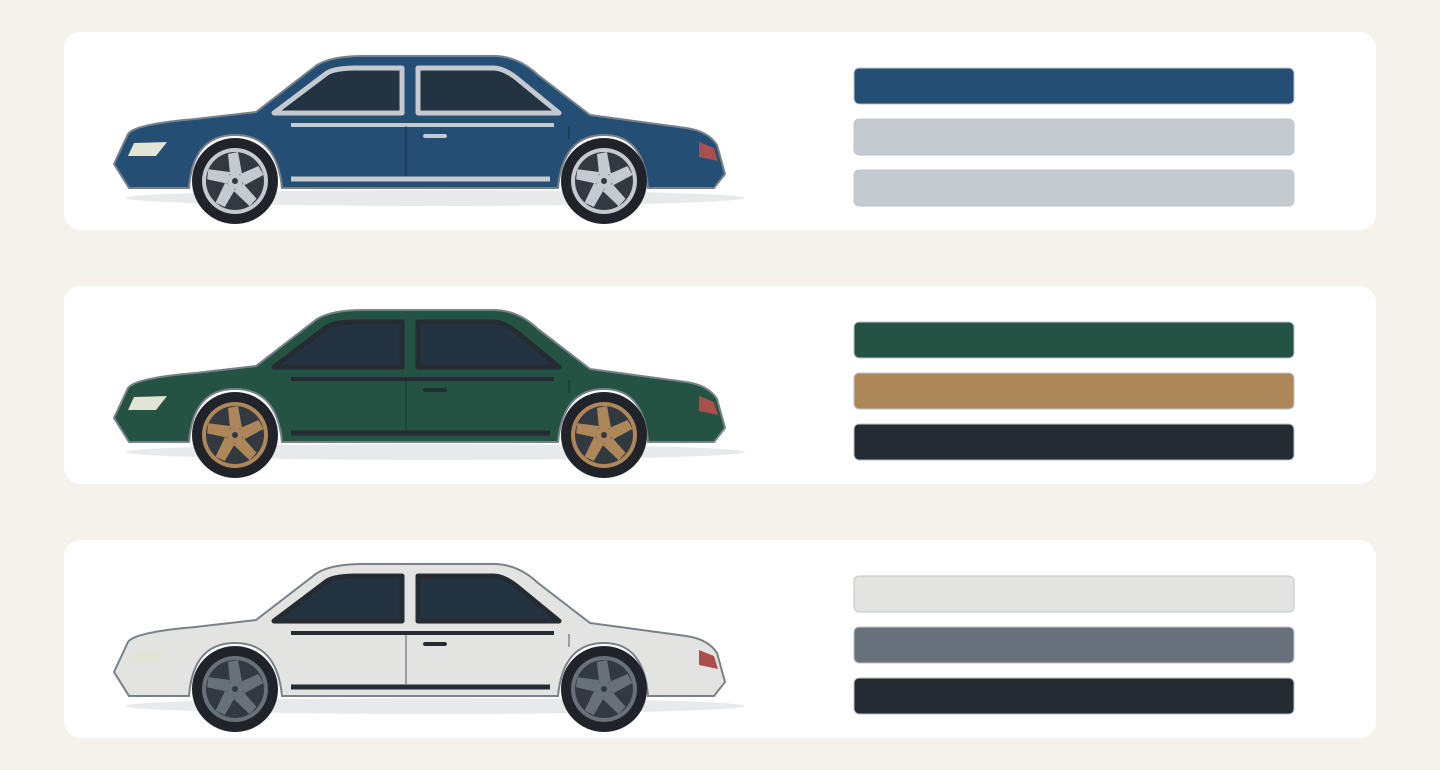
For example, green paint, bronze wheels, and black trim give each element a distinct role. The green establishes the character, the bronze adds warmth, and the black outlines the glass and lower body. Adding gold badges, red calipers, and blue wheel hardware might introduce more competing accents than you intended.
If the combination feels busy, simplify one element before changing everything. Returning badges or hardware to a quiet finish can be enough to restore balance.
Decide whether the wheels should blend or stand out
Colour coordination and visual contrast are separate choices. A wheel can suit the paint while still drawing attention through its brightness.
Silver wheels against black paint create a clear distinction between body, tyre, and spokes. Graphite wheels against medium grey paint create a quieter relationship. Black wheels on a dark car can produce a cohesive silhouette, but their design may become difficult to see in shade.
Choose the amount of contrast according to what you want people to notice. If the wheel design is the main upgrade, a finish with enough separation from the tyre and wheel arch helps show it. If the body shape should dominate, a darker or less reflective wheel can recede visually.
Check a full side view before deciding. A close-up makes almost any wheel look important; a photograph of the whole car reveals whether it actually contributes to the overall appearance.

Use the trim as your reference point
Walk around the car and identify its existing trim families. Look at the window surrounds, grille, mirrors, roof rails, badges, side skirts, and exhaust surrounds. Which finish appears most prominently?
Bright metallic trim gives silver wheels an obvious connection to the body. Black trim makes graphite or black wheels easy to integrate. Brushed or subdued metallic details can point towards a quieter wheel finish instead of a highly reflective one.
You do not need to remove all chrome to use dark wheels. A dark wheel with a lighter face or rim detail can connect to bright window surrounds while retaining a sporty character. Equally, silver wheels can work with black trim when their brightness is a deliberate contrast.
Treat mixed factory trim as a constraint to work with. Before committing to a full trim conversion, test whether one wheel finish already connects the existing elements. That may produce a more coherent result with fewer changes.
Match the finish as carefully as the colour
Two wheels labelled black can look quite different if one is glossy and the other has a low-gloss surface. Ask for the exact finish name and inspect a physical example wherever possible.
Gloss finishes are useful when you want the wheels to echo shiny grilles, mirror caps, or window surrounds. Their highlights can give a dark wheel definition, although that appearance depends on lighting and spoke shape.
Satin finishes offer a softer visual effect. Try them when glossy trim already provides enough shine, or when you want the wheels to feel distinct without introducing another bright surface.
Matte finishes can support a subdued palette. Consider them in the context of the whole car: matte wheels beside glossy paint are a deliberate texture contrast, rather than an exact finish match.
Machined, polished, or two-tone finishes can combine a bright face with darker recesses. They are worth comparing when the car has both bright and black trim. Those descriptions refer to different treatments, so confirm what the particular wheel actually uses.
The finish is also a protective system. OZ describes coatings and a final clear lacquer in its wheel finishing process. When ordering, confirm both the appearance and the care instructions for the specific product.
Wheel and trim combinations for common paint colours
Use these pairings to build a shortlist. They are editorial styling suggestions, not manufacturer specifications or promises that every shade will match.
| Paint | Wheel finishes to compare | Trim direction | Intended effect |
|---|---|---|---|
| Black | Silver, graphite, muted bronze | Bright metallic or consistent dark trim | Clear wheel definition or a restrained dark palette |
| White | Graphite, silver, satin black | Dark trim or modest metallic details | Crisp contrast or a lighter factory-inspired look |
| Silver | Graphite, darker silver, subdued bronze | Black or brushed metallic | Separation without overwhelming the body |
| Grey | Silver, graphite, muted bronze | Follow the paint's warm or cool cast | A controlled palette with visible tonal differences |
| Blue | Silver, graphite, muted gold or bronze | Bright trim for elegance; dark trim for sportiness | Cool coordination or a warm wheel accent |
| Red | Silver, graphite, black | A limited set of neutral finishes | Strong body colour with quieter supporting details |
| Green | Silver, bronze, restrained gold | Dark or modest bright trim | Classic character or a warm accent |
Black and white paint
On black paint, silver makes the wheel shape easy to distinguish. Graphite offers a less dramatic alternative, while bronze adds a visible colour accent. An all-black combination can work, but compare it in shade before choosing a wheel whose design you want to show off.
White gives dark wheels a strong visual platform. Graphite often provides contrast while retaining more visible surface detail than a very dark black. Silver creates a gentler combination, especially with bright trim. With creamy whites, compare bronze samples carefully rather than assuming every warm finish will suit.
Silver and grey paint
Similar body and wheel colours can look intentional, but an almost-match may feel indecisive. Try a visibly lighter silver or a noticeably darker graphite rather than two greys that differ only slightly.
For bronze wheels, check the body colour's cast first. A brown-leaning grey may support a warm wheel more easily than a blue-leaning grey, but the actual samples matter more than the colour names. Keep the trim simple while comparing them.
Blue, red, and green paint
Deep blue with silver wheels and bright trim is a useful starting point for an elegant build. Bronze or muted gold gives blue a stronger accent; compare the exact shade before deciding how much contrast you want.
Red paint already commands attention. Silver, graphite, or black wheels let the body remain the main colour. If you introduce another saturated accent, consider removing one elsewhere.
Green works well as a test case for either silver or warm metallic wheels. Silver can keep the look restrained; bronze or gold can give it a more distinctive character. Let the wheel colour carry that accent before repeating it across mirrors, badges, and trim.
Three complete combinations to try
An understated road car: Start with deep blue paint, silver wheels, and existing bright window trim. Retain neutral centre caps and hardware. The wheels repeat the trim's brightness, while the body supplies the colour. If the combination feels too shiny, compare a softer silver wheel before changing the trim.
A sporty daily driver: Try white paint, graphite wheels, and black window surrounds. Keep mirrors within the existing white-and-black palette. The darker trim frames the body, and graphite gives the wheel design a chance to remain visible. Compare satin and gloss versions using the same wheel design.
A warm, characterful build: Try dark green paint, muted bronze wheels, and dark trim. Let bronze be the main added accent. Neutral calipers and centre caps keep the focus on the wheel colour. If the bronze looks too vivid beside the paint, test a darker or less saturated sample.
Each combination changes a small number of variables. That makes it easier to identify what is working and what needs adjustment.
Keep calipers and small details under control
Brake calipers, centre caps, fasteners, and badges can change the impression of an otherwise simple palette. Include them in your comparison, particularly if the wheels have an open spoke design.
You can repeat an existing accent, such as a badge colour, in one additional detail. You can also leave the small parts neutral and let the wheels stand alone. Neither approach requires making every accessory match.
Avoid selecting each small detail independently. Red calipers, bronze centres, blue fasteners, and chrome badges may all be appealing, but together they create several focal points. Try removing one accent from the mock-up and see whether the car looks more resolved.
Select wheel hardware according to the wheel manufacturer's requirements. Appearance comes after compatibility; OZ's mounting manual specifies application-dependent fittings and fasteners.
Compare your shortlist in real conditions
Create three versions of the same car photograph. Keep the viewpoint, wheel design, diameter, and lighting consistent while changing the finish. Otherwise, you may prefer a different spoke design or camera angle without realising it.
Use one restrained option, one with stronger contrast, and one with a colour accent. For a grey car, that could mean silver, graphite, and muted bronze. Compare the full car first, then inspect the wheels and trim more closely.
A digital mock-up helps narrow the choices, but it cannot confirm an exact physical match. Datacolor explains that materials which match under one light source can differ under another, a phenomenon called metamerism. Its guide to light sources and colour evaluation supports checking colours under multiple lighting conditions.
Before ordering, view a sample wheel or finish chip beside the car in daylight and shade, then under the artificial lighting you regularly encounter. Keep it close to the lower body, where the wheel will actually sit. Check both close up and from several steps away.
Choose a finish you will maintain
The combination should suit how you use the car. Consider whether you enjoy cleaning intricate spokes, how frequently the wheels get dirty, and whether you want a finish that depends on a freshly detailed appearance.
Follow the care instructions supplied with the wheels. For its products, OZ recommends cleaning cold wheels with water, neutral detergents, and soft sponges, while avoiding abrasive tools. Those recommendations appear in its maintenance manual.
Low-gloss surfaces also deserve specific care. PPG's matte finish care guide advises against polishing its matte automotive finishes. For wheels, ask the manufacturer which cleaners and protective products are suitable for the exact coating.
If you plan to recolour existing wheels, check the manufacturer's restrictions first. OZ's manual prohibits alterations including painting and paint removal. A professionally applied finish still needs to be compatible with the particular wheel and its manufacturer's requirements.
Make the final choice with the whole car in view
Before buying, confirm that your preferred wheel is suitable for the exact vehicle application. OZ's manual requires checks against its application list and the vehicle's load requirements. Have the supplier or installer verify the specifications for your car before you commit to a finish.
Then return to the styling decision:
- Does the palette support the character you chose at the start?
- Can you see enough of the wheel design from a normal viewing distance?
- Do the wheels relate to at least one prominent trim finish?
- Does the combination work in daylight, shade, and artificial light?
- Are the small accents helping the design rather than competing for attention?
- Are you comfortable with the finish's care requirements?
Choose the combination that satisfies those checks with the fewest compromises. Silver wheels and bright trim can give a dark car definition. Graphite and black trim can sharpen a white car's outline. Bronze can add warmth to green or blue without needing matching accents everywhere.
The strongest result is one where you notice the complete car first, then appreciate how the paint, wheels, and trim contribute to it. Start with that whole-car view, test a small shortlist, and let the actual finishes make the final decision.